
Now, more than ever, you need a reliable, fast, secure, contact-less way to receive your money. The best and fastest way to get your tax refund is to have it electronically deposited for free into your financial account. The IRS program is called direct deposit. You can use it to deposit your refund into one, two or even three accounts. Even if you don’t have a checking account, there are other options available for direct deposit. Direct deposit is now also available for returns filed after their due date.
Eight out of ten taxpayers get their refunds by using direct deposit. It is simple, safe and secure. This is the same electronic transfer system used to deposit nearly 98 percent of all Social Security and Veterans Affairs benefits into millions of accounts.
Combining direct deposit with electronic filing is the fastest way to receive your refund. There’s no chance of it going uncashed, getting lost, stolen, or destroyed. The IRS issues more than nine out of ten refunds in less than 21 days. Taxpayers who used direct deposit for their tax refunds also received their stimulus payments more quickly. You can track your refund using our Where’s My Refund? tool.
Direct deposit is easy to use. Just select it as your refund method through your tax software and type in the account number and routing number. Or tell your tax preparer you want direct deposit. You can even use direct deposit if you are one of the few people still filing by paper. Be sure to double check your entry to avoid errors.
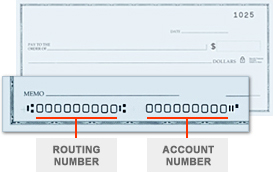
Don’t have a check available to locate your routing and account number? A routing number identifies the location of the bank’s branch where you opened your account and most banks list their routing numbers on their websites. Your account number can usually be located by signing into your online banking account or by calling your bank branch.
If you have a prepaid debit card, you may be able to have your refund deposited to the card. Many reloadable prepaid cards have account and routing numbers that you can provide to the IRS. Check with the financial institution to ensure your card can be used and to obtain the routing number and account number, which may be different from the card number.
Mobile apps may be an option Some mobile apps and prepaid debit cards allow for direct deposit of tax refunds. They must have routing and account numbers associated with them that can be entered on a tax return. Taxpayers should check with the mobile app provider or financial institution to confirm which numbers to use.
What should you do if your financial institution rejects your direct deposit refund? The IRS assumes no responsibility for tax preparer or taxpayer error. Some financial institutions accept direct deposits for some types of accounts, but not others. Contact your financial institution to ensure they will accept your direct deposit and verify your account and routing number.
- Verify your account and routing numbers with your financial institution and double check the accuracy of the numbers you enter on your return prior to signing and submitting it. You should not request a deposit of your refund into an account that's not in your own name.
- If the return hasn't already posted to our system, you can ask us to stop the direct deposit. You may call us toll-free at 800-829-1040, M - F, 7 a.m. - 7 p.m.
- Generally, if the financial institution recovers the funds and returns them to the IRS, the IRS will send a paper refund check to your last known address on file with the IRS.
- If you have contacted the financial institution and two weeks have passed with no results, you will need to file Form 3911, Taxpayer Statement Regarding Refund PDF to initiate a trace. This allows the IRS to contact the bank on your behalf to attempt recovery of your refund. Banks are allowed up to 90 days from the date of the initial trace input to respond to our request for information but it may take up to 120 days for resolution.
- If funds aren't available or the bank refuses to return the funds, the IRS cannot compel the bank to do so. The case may then become a civil matter between you and the financial institution and/or the owner of the account into which the funds were deposited.
Don’t have a bank account? Visit the FDIC website or the National Credit Union Administration using their Credit Union Locator Tool for information on where to find a bank or credit union that can open an account online and how to choose the right account for you. If you are a Veteran, see the Veterans Benefits Banking Program (VBBP) for access to financial services at participating banks. You can also ask your preparer if they have other electronic payment options that they offer.
Direct deposit also saves you money. It costs the nation’s taxpayers more than $1 for every paper refund check issued, but only a dime for each direct deposit made.
The federal tax refund is often the largest single check many people receive. It’s an opportune time to start or add to your savings. You can divide your refund into two or three additional financial accounts, including your Individual Retirement Account.
Splitting your refund is easy. You can use your tax software to do it electronically. Or, use IRS’ Form 8888, Allocation of Refund, if you file a paper return. Just follow the instructions on the form. If you want the IRS to deposit your refund into just one account, use the direct deposit line on your tax form.
With split refunds, you have a convenient option for managing your money — sending some of your refund to an account for immediate use and some for future savings — teamed with the speed and safety of direct deposit. If you plan to use all or part of your refund to by savings bonds, you can buy paper I bonds with your IRS tax refund until January 1, 2025. After that date, the IRS will no longer provide this refund option, but you can buy electronic I bonds through the U.S. Treasury’s website, TreasuryDirect. See these FAQ’s for more information.
Your refund should only be deposited directly into a United States bank or United States bank affiliated accounts that are in your own name, your spouse’s name or both if it’s a joint account. No more than three electronic refunds can be deposited into a single financial account or pre-paid debit card. Taxpayers who exceed the limit will receive an IRS notice and a paper refund.
Whether you file electronically or on paper, direct deposit gives you access to your refund faster than a paper check.